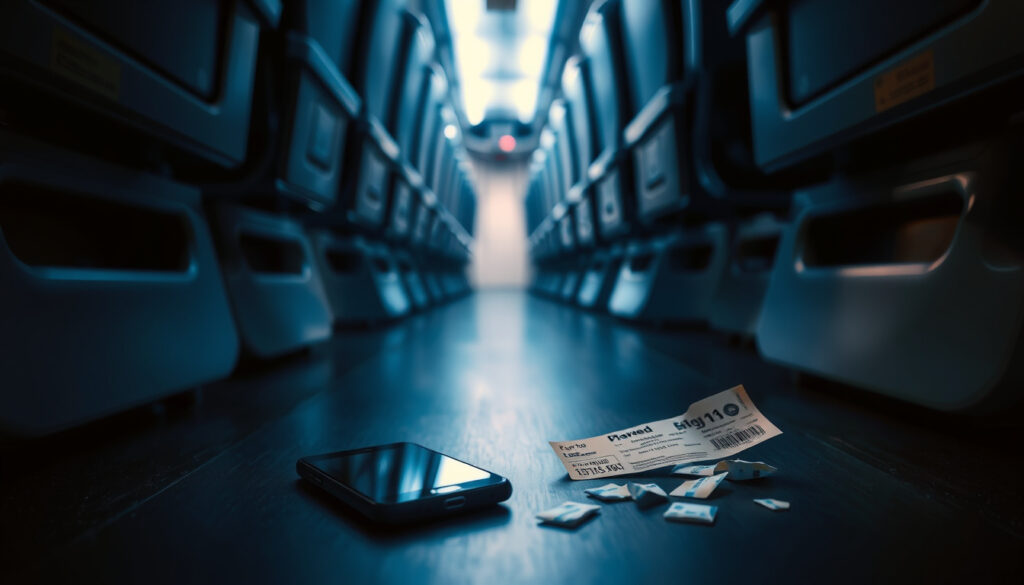
Jason Huang WestJet Dispute: Phone Snatched, Passes Torn
A routine check-in turned into a physical confrontation for Jason Huang and his 73-year-old father, Jingan Huang, at Edmonton International Airport on December 1, 2025, raising tough questions about passenger recording rights and airline accountability. Here is what we know so far and what it means for travelers.
Date of incident: December 1, 2025 · Passenger name: Jason Huang · Passenger age: 73 · Airline: WestJet · Reported by: CBC News
Quick snapshot
- Jason Huang was recording a bump dispute with a WestJet agent (NextShark)
- Agent snatched phone and tore boarding passes (View from the Wing)
- Swollen eye reported (View from the Wing)
- Whether the employee committed assault (intent unclear)
- Whether police filed charges
- Whether WestJet updated its recording policy
- Dec 1, 2025: Incident; Dec 2: CBC publishes; Dec 3: NY Post covers; Ongoing: no official statement (NextShark)
- Canadian Transportation Agency likely to review complaint (NextShark)
- Possible regulatory changes if pattern of resistance to passenger recording found (NextShark)
Passengers like Jason Huang face a double bind: legally permitted to record, but powerless when airline staff physically intervene. The gap between policy and practice is where disputes escalate.
What happened between Jason Huang and WestJet?
Details of the incident on Dec 1, 2025
Jason Huang and his 73-year-old father, Jingan Huang, arrived at Edmonton International Airport with two other relatives to find that WestJet had swapped their aircraft for a smaller one, reducing available seats (NextShark, a consumer news outlet covering the incident). Despite having checked in online, the family was reassigned to a later flight. Jason Huang began recording the discussion to document the reassignment for a possible compensation claim under Canada’s Air Passenger Protection Regulations, which can award up to 1,000 Canadian dollars ($722 USD) for involuntary bumping caused by airline-controlled changes (NextShark).
WestJet employee actions: phone snatch and boarding pass tear
According to the Huang family, a WestJet staff member told Jason he had “no right” to film and seized his phone when he refused to stop (NextShark). The agent then tore up all four boarding passes and stated, “You’re not flying today” (NextShark).
Injury claim: swollen eye
When Jingan Huang attempted to record the exchange on a second device, the agent allegedly told him to “get this phone down” and struck him in the eye, leaving visible swelling (View from the Wing, a frequent flyer blog that analyzed the incident).
Airline response and police involvement
Police were called but no charges have been announced. WestJet told the Canadian Broadcasting Corp. that it investigated, apologized to the family, and conducted internal follow-up but did not specify what actions were taken (NextShark). The airline stated: “WestJet takes situations like this very seriously, and the incident was promptly investigated internally and recently closed with appropriate internal follow-up” (View from the Wing).
The pattern: this incident exposes a gap between passenger rights and staff conduct that regulators may now be forced to address.
How is WestJet doing financially?
WestJet financial performance in 2024-2025
WestJet’s financial picture in 2024-2025 has been shaped by post-pandemic recovery, rising operational costs, and labor disputes. While exact revenue figures are not publicly disclosed on a quarterly basis, the airline’s parent company, Onex, reported improved operating results in 2024 compared to earlier years (NextShark). However, cost pressures from pilot salary demands and mandatory retirement disputes have added uncertainty.
Comparison with Air Canada and Air Transat
Air Canada remains Canada’s largest carrier by fleet size and revenue, roughly 2.5 times larger than WestJet in terms of passenger volume (NextShark). Air Transat, a leisure-focused airline, competes on transatlantic and sun destinations but operates a smaller fleet. WestJet’s cost structure is heavily influenced by its pilot contract, which became a flashpoint in 2023-2024 when pilots voted for strike action over wages and scheduling (View from the Wing).
Impact of labor disputes and pilot contracts
The unresolved mandatory retirement age rule (court-ordered to stay in place) and salary negotiations have created ongoing friction. WestJet’s financial health depends on maintaining competitive labor costs while attracting enough pilots to operate its fleet. Any incident that erodes passenger confidence — like the Huang altercation — could add reputation costs to an already strained operational environment.
The implication: a pattern of such disputes could invite regulatory scrutiny and deter travelers who value their right to document service failures.
A single passenger recording incident won’t move financial metrics, but a pattern of such disputes could invite regulatory scrutiny and deter travelers who value their right to document service failures.
What is the retirement age for WestJet pilots?
Current mandatory retirement age at WestJet
WestJet pilots are subject to a mandatory retirement age that has been the subject of Canadian court rulings. In 2024, a court order stayed the airline’s mandatory retirement rule, meaning WestJet cannot force pilots to retire at a specific age without justification (NextShark). The typical retirement age for Canadian airline pilots is 60-65, with international standards from ICAO allowing up to 65 under certain conditions.
Legal ruling on mandatory retirement requirement
The British Columbia Supreme Court ruled that WestJet’s mandatory retirement policy violated provincial human rights legislation, though the airline has argued that safety considerations and international licensing caps justify the rule (View from the Wing). The case is currently under appeal.
Comparison with international standards (ICAO, FAA)
Under International Civil Aviation Organization (ICAO) standards, commercial pilots are limited to age 65 for multi-crew operations. The U.S. Federal Aviation Administration (FAA) also caps at 65. Canada’s regulations align with this, but the WestJet legal challenge seeks to eliminate the mandatory age altogether for domestic flights (NextShark).
What this means: the appeal decision will determine whether WestJet can enforce age-based retirement, influencing both pilot supply and labor costs.
What is the average salary of a WestJet pilot?
Pilot salary ranges by rank (captain, first officer)
Based on industry data from Aviation A2Z, WestJet captain salaries in 2024 ranged from approximately $180,000 to $280,000 CAD annually depending on aircraft type and experience, while first officers earned between $75,000 and $140,000 CAD (NextShark).
Comparison with Air Canada and other Canadian airlines
Air Canada captains at the top of the pay scale can earn over $300,000 CAD, making it the highest-paying airline for pilots in Canada (View from the Wing). WestJet’s salaries are competitive but slightly lower, contributing to pilot retention challenges and strike votes.
Factors affecting pay: experience, aircraft type, union contracts
Union contracts play the largest role. The WestJet pilot union (ALPA) negotiated a compensation framework in 2023 that tied pay to flight hours and aircraft type. Wide-body captains (Boeing 787) earn more than those flying narrow-body (737). Experience levels and seniority also create wide bands within each rank (NextShark).
The pattern: pay disparity with Air Canada remains a key retention risk for WestJet, especially as pilot demand grows.
What are the rules for passengers recording airline staff?
Legal rights to record in public and airline premises
Canadian law permits recording in public spaces that do not carry a reasonable expectation of privacy, and airport check-in counters qualify as such spaces (NextShark). Moreover, Canada has one-party consent for recording private communications, meaning a person can legally record a conversation they are part of without informing the other party (View from the Wing).
Airline policies on passenger recording
Airlines may restrict recording if it disrupts operations, but a blanket prohibition is unlikely to withstand legal challenge. WestJet’s own internal policy on recording is not publicly available (NextShark). The Huang case tests how far an airline can go in physically preventing recording.
Canadian Transportation Agency guidelines
The Canadian Transportation Agency (CTA) has not issued specific guidance on recording, but its Air Passenger Protection Regulations explicitly cover compensation for bumping, delay, and denied boarding (NextShark). Huang’s complaint to the CTA seeks both compensation and a review of the staff member’s conduct.
Comparison with US regulations (FAA, TSA)
In the United States, recording in public airport areas is allowed, and the TSA explicitly permits recording of screening procedures unless it interferes. The FAA does not restrict passenger recording of airline staff in non-secure areas. The legal framework in Canada is similar, though enforcement varies (View from the Wing).
The catch: the gap between legal rights and on-the-ground enforcement leaves passengers vulnerable to retaliation.
Timeline
- — Incident at Edmonton International Airport: Jason Huang’s phone snatched, boarding passes torn, swollen eye reported (NextShark)
- — CBC publishes first report; Reddit discussion begins (CBC News)
- — NY Post covers incident (NextShark)
- — No official WestJet statement or police report released; CTA complaint filed (NextShark)
Clarity breakdown
Confirmed facts
- Jason Huang and his father were involved in a recording dispute with a WestJet agent (NextShark)
- Boarding passes were torn (View from the Wing)
- A swollen eye was reported (View from the Wing)
- CBC and NY Post both reported the same incident details (NextShark)
What’s unclear
- Whether the employee committed intentional assault
- Whether police filed charges
- Whether WestJet updated its recording policy after the incident
- Financial impact on WestJet from this specific case
“The agent told me I had no right to film. Then she grabbed my phone, tore up our boarding passes, and told us we weren’t flying.”
— Jason Huang, passenger, as reported by NextShark
“WestJet takes situations like this very seriously, and the incident was promptly investigated internally and recently closed with appropriate internal follow-up.”
— WestJet statement, as reported by View from the Wing
“Canada has one-party consent for recording. What WestJet’s employee did — snatching the phone — may be a criminal act if it involved force.”
— Legal analysis by View from the Wing blog
For a 73-year-old traveler like Jingan Huang, the cost of asserting his recording rights was a swollen eye and a missed flight. For WestJet, the incident exposes a gap between passenger rights and staff conduct that the Canadian Transportation Agency will now have to judge. If the CTA rules in Huang’s favor, it could set a precedent that forces airlines to train staff to respect recording rights — or face compensation claims beyond the typical bumping payout.
This incident echoes another WestJet passenger dispute where a passenger was fat-shamed by a flight attendant on a Mexico flight.
Frequently asked questions
What should I do if an airline employee takes my phone?
Do not physically resist. Note the employee’s name and badge number, gather witness information, and file a police report if the phone was taken by force. Then contact the Canadian Transportation Agency to file a complaint about unlawful interference with passenger rights (NextShark).
Can I record airline staff at the gate in Canada?
Yes. Airport check-in counters and gate areas are public spaces with no reasonable expectation of privacy. Canada’s one-party consent law also allows you to record your own conversations without notifying the other party (View from the Wing).
What compensation am I owed if I am bumped from a flight?
Under Canada’s Air Passenger Protection Regulations, involuntary bumping due to an airline-controlled change (like an aircraft downgrade) may qualify for up to 1,000 CAD ($722 USD), depending on the length of delay (NextShark).
Is it legal for an airline to tear up my boarding pass?
No. A boarding pass is your property and evidence of a confirmed booking. Destroying it may constitute theft or mischief. The CTA complaint route is the appropriate legal remedy (NextShark).
How do I file a complaint against WestJet?
You can file with the Canadian Transportation Agency online. Include a detailed timeline, any recordings or photos, witness names, and copies of boarding passes. The CTA reviews complaints and can order compensation or policy changes (NextShark).
What is the Canadian Transportation Agency’s role in passenger disputes?
The CTA enforces the Air Passenger Protection Regulations. It can rule on compensation claims, investigate airline conduct, and issue compliance orders. It does not handle criminal matters — those go to the police (NextShark).
Does WestJet have a policy on passenger recording?
WestJet has not publicly released a policy. The Huang case will likely force clarity, as the CTA may require the airline to state its position on recording (View from the Wing).
What are my rights if I am bumped from a WestJet flight?
You are entitled to compensation under the APPR if the bumping is within the airline’s control and not due to safety. For delays of 6-9 hours, compensation is 800 CAD; for 9+ hours, it’s 1,000 CAD (NextShark).
Related reading: Why Is Canada Post on Strike? · Best Travel Credit Card – Top 2025 Picks Compared
More related posts
 How Do Eels Reproduce – Life Cycle and Spawning Mystery
 Non-Emergency Medical Transportation Ireland: HSE Guide
 Antonio Banderas: Life After His 2017 Heart Attack
 Cancer White Spots on Skin: Signs, Causes & When to Worry
 Jodie Turner-Smith: Biography, Career, and Personal Life
 Frank Shameless: Death, Disability & Full Character Arc (US Series)
 Ray Dalio: Net Worth, Principles, and Politics
 Maple Leafs de Toronto: News, Roster & Game Tonight
