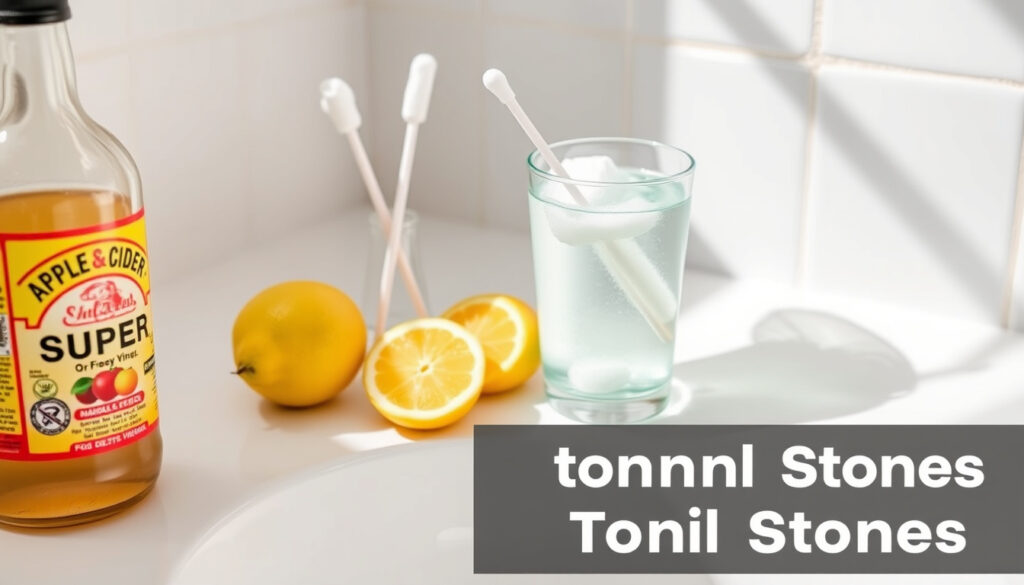
How to Remove Tonsil Stones: Home Remedies That Work
Few things are as annoying as suddenly noticing a tiny white speck at the back of your throat — only to realize it’s a tonsil stone, and no amount of gargling seems to fix it. You’re not alone: tonsil stones are surprisingly common, and most people end up trying to dislodge them at home before considering a trip to the dentist. The good news is that several home remedies actually work, as long as you know which ones are safe and how to use them properly.
Primary cause: Trapped food particles and bacteria ·
Common symptom: Bad breath ·
Home remedy count: 4 from Cleveland Clinic ·
Professional option: Tonsillectomy for recurrent cases ·
Self-removal tools: Cotton swab, water pick
Quick snapshot
- Saltwater gargle (1 tsp salt in 8 oz warm water, 30–60 seconds) (ENT Family)
- Water flosser on lowest pressure for 20 seconds (Savage Smiles)
- Cotton swab for visible stones (Medical News Today)
- Effectiveness of specific drinks for dissolving stones
- Permanent removal without surgery
- Success rates for each home method
- Tonsil stones often fall out on their own (Medical News Today)
- Water flossers popularized in dental circles over recent years (Medical News Today)
- Persistent stones may require dentist visit (Medical News Today)
- Recurrent cases may need tonsillectomy (Medical News Today)
| Fact | Detail |
|---|---|
| What they are | Calcified tonsil debris |
| Main symptom | Halitosis from bacteria |
| Self-removal safe? | Yes, with care per Cleveland Clinic |
| Pro treatment | Tonsillectomy if recurrent |
Can I remove tonsil stones yourself?
Yes, you can remove tonsil stones at home — and most of the time that’s exactly what people do before ever setting foot in a dentist’s office. The key is choosing methods that are gentle enough to avoid damaging the delicate tissue in your throat while still being effective. According to Medical News Today (health publication with medical review standards), several home approaches have earned solid reputations among dental professionals and ENT specialists alike.
How to remove tonsil stones by myself
The most accessible method is gargling with warm salt water — not because it magically dissolves stones, but because the mechanical action loosens debris and the salt creates an environment where bacteria struggle to survive. ENT Family (ENT specialist practice) recommends mixing 1 teaspoon of salt into 8 ounces or 1 cup of warm water, gargling for 30–60 seconds per session, and repeating 2–3 times daily for best results.
Consistency matters more than concentration. Gargling three times a day with a moderate saltwater solution outperforms sporadic aggressive rinses, because you’re steadily reducing the bacterial load that feeds stone growth.
How to remove tonsil stones with cotton swab
For stones that are visible and close to the surface, a cotton swab can work — but only if you approach the area with care. The technique is straightforward: wet the swab, use good lighting (a flashlight pointed at your throat works well), and gently press the surrounding tissue, not the stone itself. Medical News Today advises sweeping toward the back of your throat while avoiding the center to reduce your gag reflex, and stopping immediately if you notice any bleeding.
Your tonsils are vascular — they contain tiny blood vessels that can bleed easily if scratched or pressed too hard. A small amount of blood isn’t an emergency, but it signals you should stop and rinse with saltwater to prevent infection.
How to remove tonsil stones without gagging
The gag reflex is the biggest obstacle for most people attempting cotton swab removal. One practical trick is to remove tonsil stones in a hot shower or bath, where steam naturally opens up your throat and suppresses the reflex. YouTube demonstrates this technique, noting that the warmth and moisture relax the throat muscles and make the whole process less triggering.
Why am I getting tonsil stones?
Tonsil stones form in the small crevices, or crypts, that dot the surface of your tonsils. Those crevices are designed to trap debris — but sometimes the debris builds up faster than your body can clear it, and minerals from food, bacteria, and dead cells crystallize into the small off-white lumps you can see (or only feel) at the back of your throat.
What causes tonsil stones
The root cause is calcified debris, but several factors increase how likely you are to develop noticeable stones. Chronic tonsillitis is a significant risk factor because inflamed tonsils have deeper, more irregular crypts that trap material more easily. Poor oral hygiene allows bacteria to multiply in your mouth, which then feeds the debris that collects in tonsil crevices. And if you have large tonsils or naturally deep crypts, you’re simply more prone to buildup — this is largely a matter of anatomy, not a sign that you’re doing something wrong.
What triggers tonsil stone?
Dry mouth is a surprisingly common trigger. Saliva acts as a natural rinse, helping wash away debris before it settles into tonsil crypts. When your mouth is dry — whether from medication side effects, dehydration, or mouth breathing during sleep — that rinsing action is reduced. Similarly, eating dairy has been reported by some sources to increase mucus production, which can make debris stickier and more likely to accumulate.
Can you smell if someone has tonsil stones?
Yes — and this is usually the first sign that something is wrong. Tonsil stones produce sulfur compounds through bacterial activity, and those compounds are responsible for the distinctly unpleasant odor most people describe when they finally realize what they’re dealing with.
What do tonsil stones smell like?
Descriptions vary, but the most common is “rotten egg” or “sulfurous” — that sharp, eggy smell comes from the volatile sulfur compounds (primarily hydrogen sulfide) released by bacteria breaking down organic matter inside the stone. It’s the same family of compounds responsible for bad breath from other sources, but because the stones sit deep in tonsil crypts, the smell can be surprisingly persistent despite normal brushing and mouthwash use.
Can people smell tonsil stones?
If the stones are large enough or positioned in a way that exposes them to air, other people can definitely notice the smell — particularly in close conversation. Smaller stones may only produce noticeable odor to the person who has them, since the smell tends to be most concentrated right at the back of the throat. Either way, persistent halitosis that doesn’t respond to standard oral hygiene is a strong signal that tonsil stones could be the cause.
Can I kiss my boyfriend if I have tonsil stones?
This question comes up more than you’d expect, and the honest answer is: it’s a matter of degree and awareness. Small stones that aren’t actively producing strong odor are unlikely to be noticed during kissing. Larger or more developed stones almost certainly will be — and your partner will probably sense something is off even if they can’t identify what it is. The practical takeaway is that managing the stones (through removal and prevention) is a more reliable solution than worrying about the social dimension.
People tend to delay addressing tonsil stones because they’re embarrassed about the smell, which only lets stones grow larger and produce more odor. Acting sooner rather than later breaks that cycle.
What naturally kills tonsil stones?
“Kills” is a bit strong — no natural remedy literally dissolves tonsil stones overnight — but several household approaches can break down the material or speed up the body’s natural clearing process.
What drink dissolves tonsil stones?
Diluted apple cider vinegar is the most commonly cited acidic drink for this purpose. The idea is that the acidity can soften the hard coating of a tonsil stone over time, making it easier to dislodge through gargling. Healthline (health information platform) notes that apple cider vinegar diluted with water can be gargled to help break down stones, though the evidence is largely anecdotal and the effect is gradual. If you try it, use a ratio of roughly 1 tablespoon vinegar to 1 cup water to avoid irritating your throat.
Apple cider vinegar is acidic enough to potentially irritate your tooth enamel or throat lining if used too frequently or at full strength. If you experience burning or discomfort, dilute further or switch to plain saltwater gargling instead.
Beyond vinegar, staying well-hydrated throughout the day helps keep your mouth producing saliva, which acts as a continuous natural rinse. Alcohol-free mouthwash can also help — it removes surface bacteria without the drying effect of alcohol-based rinses, which can actually make the problem worse. GoodRx confirms that alcohol-free mouthwash is a useful adjunct for people managing tonsil stones.
How to Remove Tonsil Stones: Home Remedies & When to See a Dentist
Home remedies handle most cases, but there are clear scenarios where a dental or medical professional is the better choice. Knowing when to make that call is part of managing tonsil stones responsibly.
How to prevent tonsil stones
Prevention is genuinely within your control, and it largely comes down to consistent oral hygiene. Brush and floss regularly, gargle with saltwater once or twice daily, stay hydrated, and consider using an alcohol-free mouthwash as part of your routine. Woodbridge Dental Centre (dental practice) emphasizes that good oral hygiene, hydration, and alcohol-free mouthwash together prevent tonsil stone buildup — not any single measure alone.
How to get rid of tonsil stones forever
There’s no guaranteed way to eliminate tonsil stones permanently without surgery, and the reason is anatomical: your tonsils have crypts, and as long as crypts exist, debris can accumulate in them. What you can do is dramatically reduce frequency and size by maintaining the hygiene habits described above. For people with recurrent, large, or frequently symptomatic stones, a doctor may discuss tonsillectomy — surgical removal of the tonsils — but this is a last resort considered only when other approaches have failed.
How to remove tonsil stones you can’t see
Sometimes a stone is present and causing symptoms — bad breath, throat discomfort, a feeling of something stuck — but isn’t visible when you open your mouth. In these cases, a water flosser is your most useful tool. RVC Dental Suite recommends using a low-pressure water irrigator or oral syringe with warm salt water to target tonsil crypts effectively for stones that are deeper and not visible on the surface. Lean forward while using it so water and dislodged material flow out of your mouth rather than down your throat.
Don’t use water flossers or irrigation on children — the choking hazard and injury risk outweigh any benefit. Medical News Today is explicit on this point.
“While home remedies can be helpful, it’s crucial to be gentle and avoid causing damage to your tonsils. If in doubt, seek professional advice.”
— Dr. Sandra Farber, Woodbridge Dental Centre
“Gargle with warm salt water, use a water pick to flush tonsil stones out, and maintain good oral hygiene consistently — that’s the trifecta that most dental sources actually agree on.”
— RVC Dental Suite (dental practice)
For people dealing with persistent or symptomatic tonsil stones, the choice is straightforward: home methods handle most cases, but a dentist visit becomes the right call when stones resist removal, cause pain, or lead to any sign of infection. GoodRx notes that dentists can manually remove smaller tonsil stones during a routine check-up quickly and with minimal discomfort — so professional removal isn’t a drastic step, it’s simply a more controlled option when you need it.
Related reading: What Causes Kidney Stones
fundental.com, savage-smiles.com, youtube.com, southdakota.deltadental.com, youtube.com
Saltwater gargles and water picks effectively dislodge tonsil stones, much like the fast home remedies detailed for quick relief from that scratchy throat feeling.
Frequently asked questions
What are tonsil stones?
Tonsil stones (tonsilloliths) are small lumps of calcified debris that form in the crevices of your tonsils. They consist of food particles, dead cells, and bacteria that have hardened over time.
Do tonsil stones go away on their own?
Often yes. Small tonsil stones frequently dislodge and fall out without any intervention, particularly through gargling or coughing. Larger stones may need active removal.
Are tonsil stones harmful?
They’re generally not dangerous, but they can cause bad breath, discomfort, and occasionally pain or infection if they become large or embedded. Most cases are benign but worth managing.
How long do tonsil stones last?
It varies. Small stones may clear within days with regular gargling. Larger ones can persist for weeks or longer without removal. Recurrence depends heavily on your oral hygiene habits.
Can tonsil stones cause infection?
In rare cases, yes. An embedded stone can irritate surrounding tissue and create an environment where bacteria multiply, potentially leading to tonsillitis or a localized abscess. If you experience fever, severe pain, or swelling, see a doctor.
Does mouthwash help tonsil stones?
An alcohol-free mouthwash can help reduce the bacteria that contribute to tonsil stone formation and manage bad breath associated with them. Alcohol-based rinses can dry out your mouth and may worsen the problem.
Are tonsil stones contagious?
No — tonsil stones are not contagious. They are a personal condition caused by your own tonsil anatomy and oral environment, not a virus or bacteria that spreads to others.
For patients dealing with recurring tonsil stones, the practical path is clear: start with consistent saltwater gargling and improved oral hygiene, add a water flosser if stones sit deeper in crypts, and see a dentist if home removal stops working or symptoms escalate. Surgery is a last resort, not a first step — and most people can manage the problem effectively without ever reaching that point.
More related posts
 Jordon Hudson: Age, net worth, Snoop Dogg, Belichick girlfriend
 How to Fix Slow Startup Windows – Step-by-Step Fixes
 Shoppers Drug Mart Stratford: 3 Stores Compared
 Montreal Canadiens Lineup Tonight vs Rangers | Rookies & Injuries
 Daffy Duck: History, Catchphrase, and Character Facts
 Hot Dogs in Air Fryer – Quick Crispy Guide
 Eva Longoria Movies and TV Shows: Full List & Highlights
 Ludivine Reding: Biography, Age, Movies & Instagram
