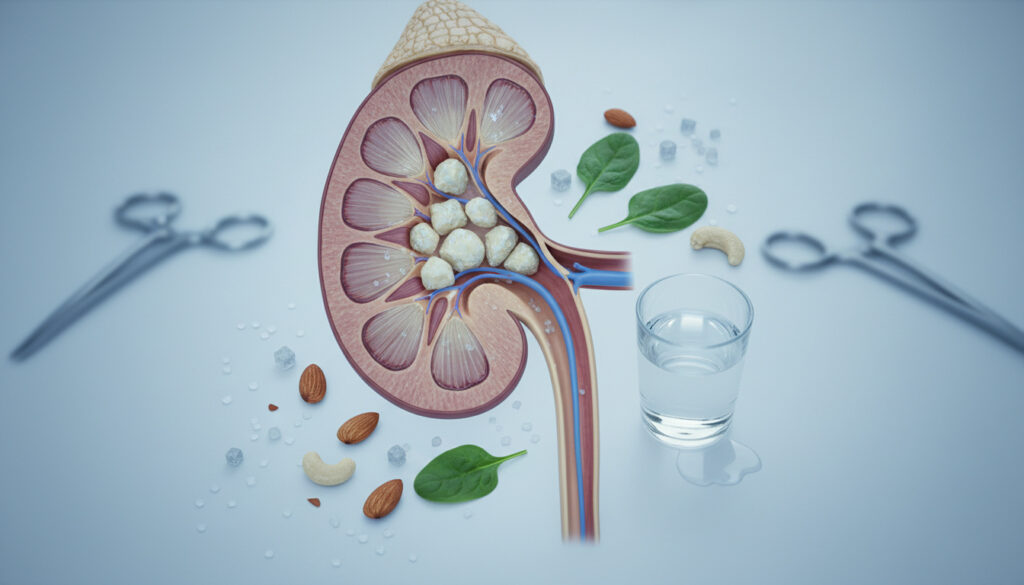
What Causes Kidney Stones – Key Triggers Explained
The Growing Burden of Nephrolithiasis
Kidney stones affect roughly one in ten adults during their lifetime, with incidence rates climbing steadily across North America. These crystalline mineral deposits form when urine becomes concentrated with stone-forming substances, creating jagged formations that can obstruct the urinary tract and cause excruciating pain. Understanding the multifaceted origins of nephrolithiasis has become essential for both prevention and management.
The Four Pillars of Stone Formation
Several distinct mechanisms contribute to the development of renal calculi. Rather than arising from a single source, stones typically emerge from an interplay of environmental, dietary, and physiological factors that disrupt the delicate chemical balance of urine.
Dehydration and Concentrated Urine
Inadequate fluid intake remains the primary catalyst for stone formation. When daily urine output drops below two liters, the concentration of calcium, oxalate, and uric acid rises sharply, exceeding the capacity of urinary inhibitors to prevent crystallization. Proper hydration practices significantly reduce this risk by maintaining dilute urine.
Dietary Triggers
High sodium consumption increases calcium excretion through the kidneys, while excessive animal protein generates acid that leaches calcium from bones and reduces urinary citrate. Foods rich in oxalates—such as spinach, rhubarb, and almonds—provide the building blocks for calcium oxalate stones when consumed in large quantities.
Metabolic Disorders
Hyperparathyroidism, renal tubular acidosis, and gout alter urinary chemistry in ways that favor stone crystallization. Diabetes and obesity independently increase risk through insulin resistance and altered urine pH.
Genetic Predisposition
Family history doubles the likelihood of stone development. Rare genetic conditions like cystinuria and primary hyperoxaluria cause recurrent stone formation beginning in childhood.
The Chemistry of Crystallization
Stone formation begins at the molecular level when urine becomes supersaturated with stone-forming salts. Under normal conditions, substances like citrate and magnesium act as natural inhibitors, binding to calcium and preventing aggregation. However, when concentration exceeds solubility thresholds, crystals nucleate around Randall’s plaques—calcium deposits on the renal papillae. Over months or years, these microcrystals grow through layer-by-layer deposition, eventually breaking free and entering the collecting system. Research indicates that this process involves complex interactions between urinary macromolecules and mineral ions.
Stone Composition and Specific Causes
| Stone Type | Prevalence | Primary Cause | Dietary Factors |
|---|---|---|---|
| Calcium Oxalate | 70-80% | High oxalate absorption, low citrate | Spinach, chocolate, tea, nuts |
| Calcium Phosphate | 10-15% | Renal tubular acidosis, hyperparathyroidism | High sodium, alkaline urine |
| Uric Acid | 5-10% | Low urine pH, gout, high purine intake | Organ meats, shellfish, alcohol |
| Struvite | 2-3% | Urinary tract infections (Proteus, Klebsiella) | Not diet-related |
| Cystine | 1% | Hereditary cystinuria | High methionine foods |
Beyond Diet: Systemic Contributors
While nutrition plays a central role, several medical conditions significantly elevate risk. Clinical studies demonstrate that inflammatory bowel disease and chronic diarrhea alter bile acid absorption, leading to hyperoxaluria. Bariatric surgery, particularly Roux-en-Y gastric bypass, induces enteric hyperoxaluria through fat malabsorption and intestinal oxalate overabsorption.
Medications also contribute to stone pathogenesis. Loop diuretics increase urinary calcium excretion, while protease inhibitors used in HIV management precipitate as drug stones. Topiramate and zonisamide, anticonvulsants prescribed for epilepsy and migraine prophylaxis, inhibit carbonic anhydrase in the kidney, creating metabolic acidosis and hypocitraturia.
Geographic and seasonal variations reveal the profound impact of climate. Residents of hot, arid regions develop stones at twice the rate of cooler climates due to insensible fluid losses. Epidemiological data shows peak emergency department visits for renal colic coincide with heat waves, underscoring the critical role of thermoregulation in stone prevention.
From Nucleation to Obstruction
Stone development unfolds over years, not days. Initially, microscopic crystals form within the nephron’s collecting ducts, anchored to the urothelium. During the latent period, which may span three to five years, these deposits remain asymptomatic and radiographically undetectable. Gradual accretion transforms these seedlings into radiopaque calculi.
Eventually, stones migrate from the renal pelvis into the ureter. The ensuing obstruction triggers the intense flank pain characteristic of renal colic. Longitudinal studies suggest that once an initial stone passes, the recurrence rate reaches 50% within five years without prophylactic intervention.
Correcting Common Misconceptions
Many patients incorrectly assume calcium restriction prevents stones. In reality, adequate dietary calcium binds oxalate in the gut, reducing absorption and urinary excretion. Current guidelines recommend maintaining normal calcium intake while avoiding supplements unless medically indicated.
Another myth suggests cranberry juice prevents stones. While effective for urinary tract infections, cranberry juice acidifies urine and increases urinary oxalate and calcium, potentially raising stone risk. Similarly, vitamin C supplementation metabolizes to oxalate; doses exceeding 1000mg daily correlate with higher stone incidence.
Evolving Patterns in Stone Disease
The demographic profile of stone formers has shifted dramatically. Where middle-aged white men once dominated statistics, women and adolescents now represent the fastest-growing cohort. This shift correlates with rising obesity rates and dietary changes toward high-processed, sodium-laden foods. Climate change projections suggest that by 2050, rising temperatures could increase the population-wide risk by 25% through dehydration mechanisms.
Advances in metabolic profiling reveal that stones rarely occur in isolation. Most patients exhibit multiple urinary abnormalities—hypercalciuria combined with hypocitraturia, for instance—requiring comprehensive 24-hour urine analysis rather than single-cause interventions. Contemporary protocols emphasize personalized prevention based on stone composition and urinary biochemistry.
Clinical Perspectives
“We used to treat kidney stones as an acute surgical problem. Now we recognize them as the visible manifestation of chronic metabolic dysfunction. The stone is merely the symptom; the underlying urinary chemistry tells the real story.”
— Dr. Sarah Chen, Nephrologist, University Health Network
Dr. Chen emphasizes that renal health management requires addressing systemic factors rather than simply removing the stone. She notes that patients who undergo metabolic evaluation and targeted dietary modification reduce recurrence rates by 60% compared to those receiving only procedural intervention.
Key Takeaways
Kidney stones emerge from the complex interaction of dehydration, dietary excess, metabolic abnormalities, and genetic susceptibility. Calcium oxalate remains the predominant composition, though uric acid stones increasingly affect patients with metabolic syndrome. Prevention centers on maintaining urinary volume above two liters daily, moderating sodium and animal protein intake, and preserving normal dietary calcium consumption. For recurrent stone formers, specialized metabolic evaluation identifies specific urinary abnormalities amenable to targeted pharmacological or dietary therapy.
Frequently Asked Questions
Can certain beverages increase the risk of kidney stones?
Sugar-sweetened beverages, particularly those containing high-fructose corn syrup, significantly elevate risk by increasing urinary calcium and oxalate excretion. Colas contain phosphoric acid, which reduces urinary citrate. Conversely, citrus juices rich in citrate, such as lemonade and orange juice, may offer protective benefits by binding calcium and inhibiting crystal formation.
Why do some people get recurring stones while others never experience them again?
Recurrence depends on whether underlying metabolic disturbances persist. Patients with residual hyperoxaluria, hypocitraturia, or high urinary sodium remain at elevated risk. Without addressing these specific chemical imbalances through dietary modification or medication, the physical conditions promoting crystallization continue unchanged.
Does pregnancy increase the risk of developing kidney stones?
Pregnancy induces several physiological changes that alter urinary composition. Increased urinary calcium and uric acid excretion, combined with relative urinary stasis due to progesterone-mediated ureteral dilation, create favorable conditions for stone formation. However, the overall incidence remains low, occurring in roughly 1 in 1,500 pregnancies.
Are children susceptible to the same stone causes as adults?
While dehydration and dietary factors affect children similarly, pediatric stone disease often signals underlying genetic or anatomical abnormalities. Cystinuria, primary hyperoxaluria, and renal tubular acidosis require early identification to prevent chronic kidney disease. Modern increases in childhood stone rates largely reflect dietary patterns—high sodium, low fiber, and inadequate fluid intake.
More related posts
 50 USD to CAD – Exchange Rate Today & How to Convert
 Tatiana Schlossberg: JFK’s Granddaughter Dies of Leukemia at 35
 Cast of Dexter: New Blood – Main Actors, Characters, and FAQs
 Bam Margera: Diagnosis, Net Worth, and What Happened
 Ripley’s Aquarium of Canada – Hours, Tickets and Top Tips
 Daniel Cormier: UFC Record, Accusations & Tragedy
 Fireboy and Watergirl Unblocked: Play Online Free at School Guide
 2579xao6 New Software Name: Features & Release 2025
