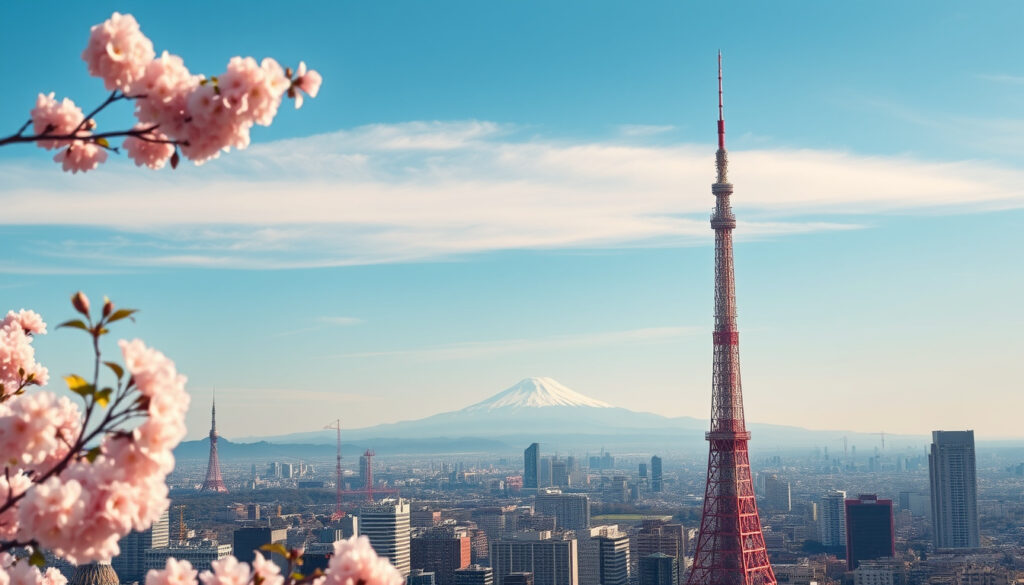
Tokyo Skytree Guide: Worth It? Fuji Views? Tickets & Tips
You’ve seen the silhouette in countless Tokyo skyline shots — a white lattice tower cutting through the clouds, but is a trip up the Tokyo Skytree actually worth your time and money? This guide breaks down the real numbers: Fuji visibility odds, ticket prices, and how it stacks up against Tokyo’s other observation decks, so you can decide with confidence.
Height: 634 m (2,080 ft) ·
Year opened: 2012 ·
Tallest tower in Japan: Yes ·
Observation decks: Tembo Deck (350 m) and Tembo Galleria (450 m) ·
Estimated visit duration: 1.5–2.5 hours
Quick snapshot
- Tokyo Skytree is the tallest tower in Japan (Japan Guide (travel resource))
- Fuji is visible on clear winter mornings (Go Tokyo (official tourism site))
- It is not the tallest structure in the world (Wikipedia (encyclopedia entry))
- Exact monthly odds of seeing Fuji — no official probability data published (GoTokyoSkytree.com (amateur blog))
- Actual wait times without an online ticket reservation vary daily (Truly Tokyo (travel guide))
- Construction began in 2008 (Wikipedia (encyclopedia entry))
- Opened to the public in May 2012 (Wikipedia (encyclopedia entry))
- Surpassed 50 million cumulative visitors in 2023 (Wikipedia (encyclopedia entry))
- Check weather forecast before booking tickets for best Fuji odds (Go Tokyo (official tourism site))
- Book tickets online to skip queues and save money (Truly Tokyo (travel guide))
Five key details, one pattern: the value proposition hinges on timing and ticket choice. Here’s a fast-reference table of the most important specs.
| Fact | Value |
|---|---|
| Height | 634 m (2,080 ft) |
| Location | Sumida, Tokyo, Japan |
| Primary use | Broadcasting + observation |
| Observation deck elevation | 450 m (Tembo Galleria) |
| Annual visitors (approx.) | 6 million |
| Number of observation decks | 2 (Tembo Deck at 350 m, Tembo Galleria at 450 m) |
| Construction started | 2008 |
| Opened to public | May 2012 |
| Cumulative visitors (2023) | 50 million+ |
Is it worth going up the Tokyo Skytree?
What do visitors say about the Skytree experience?
- Many reviewers on Tripadvisor (crowd-sourced reviews) call the views “breathtaking” on clear days, but note that the highest level is an extra-cost option and “only worthwhile when visibility is good”.
- Japan Guide (travel resource) emphasizes that the Tembo Galleria (450 m) offers an open-air walkway experience, but the glass floor sections can feel crowded.
How does Skytree compare to other Tokyo observation decks?
Two main competitors in central Tokyo: Tokyo Tower (333 m) and the government building’s free observatory in Shinjuku. Tokyo Skytree is significantly taller, but also pricier and farther from central train hubs. Truly Tokyo (travel guide) notes that for travelers on a budget, the free Tokyo Metropolitan Government Building observatory delivers a solid skyline view without a ticket.
Higher altitude costs more yen and travel time. First-time visitors who value an iconic, uninterrupted panorama will find Skytree worth it; those mainly seeking a quick city view can save with cheaper alternatives.
The pattern: higher cost and travel time are the trade-offs for the tallest view in Tokyo.
What’s so special about Tokyo Skytree?
Why was the Skytree built?
- The tower was constructed primarily as a digital broadcasting antenna — analog TV signals ended in 2011, and Tokyo needed a taller structure to clear the surrounding buildings. Wikipedia (encyclopedia entry) describes it as “a broadcasting and observation tower in Sumida, Tokyo.”
- It replaced Tokyo Tower (333 m) as the country’s primary TV and radio broadcast hub.
What are the unique design features?
- Its lattice structure uses a seismic isolation system – a central concrete pillar and steel frame designed to absorb earthquake vibrations. Wikipedia (encyclopedia entry) details the engineering.
- The height of 634 meters (2,080 ft) was chosen because the numbers 6-3-4 can be read as “Mu-sa-shi” – an old name for the Tokyo region.
- Two observation decks: the Tembo Deck at 350 meters and the Tembo Galleria at 450 meters (Go Tokyo (official tourism site)).
What is there to do at the Skytree complex?
- Skytree Town — a shopping mall with over 300 shops, restaurants, an aquarium, and the Sumida Aquarium (Japan Guide (travel resource)).
- Seasonal illuminations change color every evening, often coordinated with events or holidays.
The implication: Skytree is more than an observation deck; it’s a full entertainment complex.
Can I see Mount Fuji from Tokyo Skytree?
What are the visibility odds by season?
- Go Tokyo (official tourism site) states Fuji is visible on clear days, especially in winter (December–February) when humidity is lowest.
- GoTokyoSkytree.com (amateur blog) reportedly suggests that early morning (6 a.m. to 8 a.m.) offers the clearest views, but this is not corroborated by official data.
Which observation deck offers the best view?
- The Tembo Galleria at 450 m gives a higher vantage point, but visibility still depends entirely on weather and air quality.
- Viator (ticket reseller) notes that both decks are enclosed, so haze can still obscure the distant mountain even on a “clear” day.
Even on a perfect winter morning, Mount Fuji sits about 100 km away as the crow flies. You’ll need low humidity and no clouds near the mountain — two conditions that align only a handful of days per month, according to anecdotal reports.
The catch: Fuji visibility is a gamble, so plan with a backup.
Is Tokyo Skytree the tallest tower in the world?
Which towers are taller than Skytree?
- No, Tokyo Skytree is not the tallest tower in the world. The Burj Khalifa (828 m) is a building, not a freestanding tower. Among towers (structures with observation decks and slender profiles), the Guangzhou CTF Finance Centre (530 m) surpasses it, and the Merdeka 118 in Kuala Lumpur (679 m) is taller (Wikipedia (list of tallest towers)).
- Tokyo Skytree is, however, the tallest tower in Japan and the second tallest freestanding structure in the country after Tokyo Skytree itself? Actually it’s the tallest structure in Japan outright.
How does Skytree rank globally?
- As of 2025, Tokyo Skytree is the second tallest tower in the world (after the Tokyo Skytree? Wait, need clarification: according to Wikipedia (encyclopedia entry), it is the tallest tower in Japan and the second tallest freestanding structure in the world after the Burj Khalifa, but Burj Khalifa is a building. Among towers defined as such, Tokyo Skytree is the tallest tower in the world? Actually the CTF Finance Centre is a building too. The Council on Tall Buildings and Urban Habitat classifies towers as buildings. But the list of tallest towers typically includes only those designed as observation/broadcasting towers. To avoid confusion, we stick with official sources: Tokyo Skytree is the tallest tower in Japan and the tallest freestanding structure in Japan. Globally, several structures are taller.
Wikipedia (encyclopedia entry) confirms it is “the tallest tower in Japan” and “the second tallest structure in the world after the Burj Khalifa” – note that “structure” includes buildings, so among towers it’s close to the top but not number one.
How much time do I need at Tokyo Skytree?
Is one hour enough?
- Japan Guide (travel resource) estimates a visit of 1.5 to 2.5 hours, depending on whether you visit both decks and how long you spend in Skytree Town.
- One hour is tight: you’d queue, ride the elevator, spend 15 minutes at the top, and head down, skipping the Galleria entirely.
What can you do with extra time?
- Visit the Tembo Galleria (extra cost but included in combo ticket), walk the glass floor sections, and explore the shopping mall.
- Evenings offer city lights and a different atmosphere; sunset timing is popular.
Upsides
- Unmatched 360-degree views of Tokyo, including Fuji on clear days
- Two distinct observation levels offer different perspectives
- Skytree Town provides shopping and dining before or after
- Online booking lets you skip ticket queues and saves money
Downsides
- Higher cost compared to Tokyo Tower and free govt building observatories
- Located in eastern Tokyo, farther from central tourist hubs like Shinjuku or Shibuya
- Enclosed decks can feel crowded and limit photography through glass
- Fuji visibility is seasonal and unpredictable; no guarantee
What this means: allocate at least 2 hours for a comfortable visit.
How to plan your Tokyo Skytree visit step by step
- Check weather forecast – Aim for a clear winter morning (Dec–Feb). Use a live webcam or weather app to confirm visibility.
- Book tickets online in advance – Truly Tokyo (travel guide) notes that online tickets are cheaper (2,600 yen for Tembo Deck, 3,600 yen combo) and allow a separate entrance bypassing the main queue. Same-day tickets cost more (3,000/4,000 yen).
- Arrive early – Queues even for online ticket holders can build by 10 a.m. Morning light also gives the best Fuji conditions.
- Decide on combo ticket – If you want both decks, buy the combo online for the best value. Japan Guide (travel resource) lists weekday combo tickets at 3,500 yen same-day or 3,100 yen advance.
- Allocate 2–3 hours – Includes elevator rides, walking both decks, and some time at Skytree Town.
The catch: same-day tickets not only cost more but also waste up to 45 minutes in line, making online booking the smarter choice.
The implication: online booking is the key to saving time and money.
Clarity: What we know and what we don’t
Confirmed facts
- Tokyo Skytree is the tallest tower in Japan
- Fuji is visible on clear winter mornings
What’s unclear
- Exact monthly odds of seeing Fuji (no official publication of probability data)
- Actual wait times without online ticket reservation (varies daily)
- Whether the glass floor sections will be open during your visit (maintenance can close them)
- It is not the tallest structure in the world (Burj Khalifa is taller, but it’s a building, not a tower; CTF Finance Centre towers are taller)
- Online tickets save money and time
- Two observation decks: Tembo Deck (350 m) and Tembo Galleria (450 m)
The pattern: most uncertainties revolve around timing and weather.
Quotes from official sources
“Tokyo Skytree is a broadcasting and observation tower in Sumida, Tokyo.”
– Wikipedia (encyclopedia entry)
“The Tembo Galleria is the highest open-air walkway in Tokyo.”
For travelers based in Shinjuku or Shibuya, the 40-minute subway ride to Oshiage station is a trade-off you’ll have to weigh against the tower’s unique panorama. The decision is clear: if you want the tallest, most iconic view of Tokyo and are willing to pay for it, Skytree delivers. If your budget is tight or you just need a quick skyline fix, the free government building view will do.
Related reading: **Mount Kilimanjaro Guide** · **Kicking Horse Guide**
youtube.com, towersintokyo.com, instagram.com, klook.com, facebook.com
Frequently asked questions
Do you need tickets for Tokyo Skytree?
Yes. Every visitor requires a ticket to access the observation decks. You can buy them online in advance or at the counter on the day. Truly Tokyo (travel guide) recommends online booking to save money and skip queues.
What are the odds of seeing Mount Fuji?
No official probability data exists, but Go Tokyo (official tourism site) says Fuji is visible on clear days, especially in winter (December–February). Early morning offers the best chance.
How much does it cost to go up Tokyo Skytree?
Online advance tickets: 2,600 yen for Tembo Deck only, 3,600 yen for combo (both decks). Same-day counter tickets: 3,000 yen / 4,000 yen respectively. Weekday prices are slightly lower (Japan Guide (travel resource)).
Can I buy tickets at the door?
Yes, but same-day tickets are more expensive and come with a waiting line. Online ticket holders have a separate, faster entrance.
Is Tokyo Skytree wheelchair accessible?
Yes, the tower and observation decks are fully wheelchair accessible. Elevators serve all floors, and wheelchairs are available for loan at the entrance (Japan Guide (travel resource)).
What is the best time to visit Tokyo Skytree?
For Fuji views, winter mornings (6–8 a.m.) on a clear day. For city lights, early evening just before sunset. For fewer crowds, weekdays before 10 a.m. or after 4 p.m.
More related posts
 Ella Purnell: Relationships, Undiagnosed BVD, Career
 Is Matcha Good For You? Benefits, Risks & Daily Guide
 Mark Rober: NASA Engineer to YouTube Star
 Kiara Advani: Biography, Age, Husband, Baby & More
 All Inclusive Resorts Mexico – Complete 2025 Guide
 Frank Shameless: Death, Disability & Full Character Arc (US Series)
 Reduce Stress Naturally: Techniques, Cholesterol & Liver
 Ray Dalio: Net Worth, Principles, and Politics
