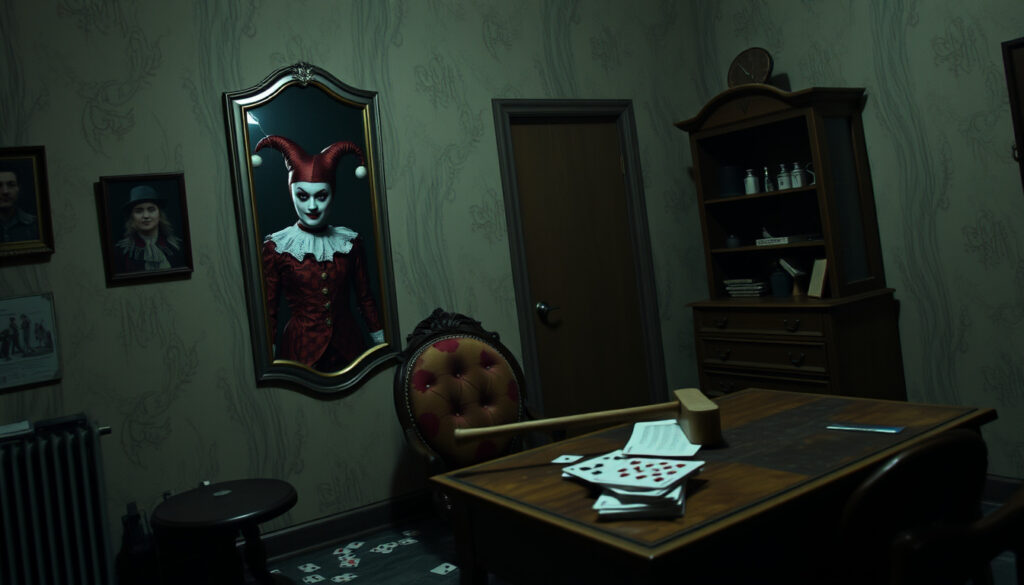
Harley Quinn: Origin, Story, and Psychology Explained
There aren’t many fictional characters who started as a background gag and ended up headlining their own movies, but Harley Quinn pulled it off. What makes the journey from Dr. Harleen Quinzel to chaotic antihero so fascinating isn’t just the clown costume—it’s the psychological transformation that keeps readers and viewers debating her true nature.
First appearance: Batman: The Animated Series, “Joker’s Favor” (September 11, 1992) ·
Real name: Dr. Harleen Frances Quinzel ·
Created by: Paul Dini and Bruce Timm ·
Primary affiliation: Formerly Joker; later Poison Ivy, Birds of Prey ·
Notable diagnoses: Borderline personality disorder, histrionic traits, psychopathy (varies by continuity)
Quick snapshot
- First appeared in Batman: The Animated Series (1992) (DC Database fan-curated wiki)
- Created by Paul Dini and Bruce Timm (CompleteSet history article)
- Real name: Dr. Harleen Frances Quinzel (DC Comics official blog)
- Former psychiatrist at Arkham Asylum (DC Comics YouTube origin video)
- Was the Joker’s girlfriend and sidekick (Psychology Today analysis)
- Later became close with Poison Ivy (DC Comics official blog)
- Member of the Suicide Squad and Birds of Prey (Wikipedia entry)
- Has a daughter (Lucy) in the Injustice universe (Psychology Today analysis)
- Expert gymnast and acrobat (DC Database fan-curated wiki)
- Skilled in hand-to-hand combat (DC Database fan-curated wiki)
- Uses a variety of weapons (mallet, bat, guns) (DC Database fan-curated wiki)
- Occasional access to Joker’s toxins (DC Database fan-curated wiki)
- Originally a villain, now often an antihero (Wikipedia entry)
- Committed violent acts but also shows compassion (Wikipedia entry)
- Alignment shifts between continuities (Wikipedia entry)
- Modern portrayals emphasize her redemption arc (Wikipedia entry)
The snapshot above shows six key facts about Harley Quinn: every apparent contradiction—doctor turned criminal, villain turned antihero—traces back to a single relationship gone wrong.
| Attribute | Detail | Source |
|---|---|---|
| Full name | Dr. Harleen Frances Quinzel | DC Comics official blog |
| Alias | Harley Quinn | DC Database fan-curated wiki |
| First appearance | Batman: The Animated Series – “Joker’s Favor” (September 11, 1992) | CompleteSet history article |
| Created by | Paul Dini and Bruce Timm | DC Comics official blog |
| Notable affiliations | Joker (ex), Poison Ivy, Suicide Squad, Birds of Prey | Wikipedia entry |
| Abilities | Acrobatics, combat, weapon proficiency | DC Database fan-curated wiki |
What is Harley Quinn’s story?
Who created Harley Quinn?
Harley Quinn was created by Paul Dini and Bruce Timm for Batman: The Animated Series and first appeared in the episode “Joker’s Favor” on September 11, 1992, according to the DC Database fan-curated wiki. She was conceived as a one-off sidekick for the Joker, but audience reception was so strong that she returned in later episodes and eventually crossed into mainstream comics via the Batman: Harley Quinn special, as noted by DC’s official blog.
What is her real name before becoming Harley Quinn?
Her real name is Dr. Harleen Frances Quinzel, a brilliant psychiatrist who interned at Arkham Asylum. DC Comics’ official origin video describes her as a “leading psychiatrist” who specialized in criminal psychology before meeting the Joker.
How did she meet the Joker?
As a young psychiatrist, Harleen Quinzel became fascinated with the Joker during her sessions at Arkham. CompleteSet’s history article outlines how the Joker manipulated Dr. Quinzel with lies about his past to gain her sympathy. She helped him escape Arkham multiple times before fully adopting the Harley Quinn persona. The classic transformation depicts Harleen trading her lab coat for a jester costume after seeing the Joker injured, cementing her psychological break from reality.
The implication: Harley Quinn’s origin is a systematic dismantling of a professional identity by a master manipulator. The tragedy isn’t that she became a villain; it’s that she was engineered into one.
Harleen Quinzel was trained to recognize manipulation. She diagnosed it in others every day. Yet she became its most famous victim because the Joker offered something her clinical world lacked: emotional intensity that felt like love.
Is Harley Quinn a Joker’s lover?
Was the Joker actually in love with Harley Quinn?
Harley originally believed she was in a romantic relationship with the Joker, but Psychology Today’s analysis describes the dynamic as one of manipulation and abuse. The Joker’s affection, where it exists at all, is typically portrayed as conditional and sadistic. In many continuities, their relationship is on-again, off-again, with Harley often suffering physical and emotional harm.
Could the Joker and Harley Ever Work?
Some interpretations—notably the Harley Quinn adult animated series—show her leaving him and building an independent life. Yet the question persists because their dynamic remains the defining relationship of both characters. Psychology Today’s piece frames it as a classic codependency: a histrionic partner (Harley) tethered to an antisocial one (Joker), where each reinforces the other’s pathology.
The trade-off: fans who want Harley to thrive must accept that her most iconic relationship is fundamentally toxic. The better she gets as a character, the further she has to move from the Joker.
The 2024 Harley Quinn animated series and recent DC comics increasingly position her as a solo agent. But every time a new writer pulls her back to the Joker, the cycle resets—and the audience’s appetite for that dynamic remains huge.
Who did Harley Quinn have a child with?
Did Harley Quinn have a baby with the Joker?
In the Injustice universe, Harley Quinn and the Joker had a daughter named Lucy Quinzel. However, mainstream DC continuity does not typically include a child between them. Wikipedia notes that Lucy Quinzel appears only in alternate-reality storylines, not the core comics. Other alternate realities show different outcomes, but none have been adopted as canon in the primary Earth-0 continuity.
The pattern: Harley’s motherhood is treated as a what-if scenario rather than a defining trait. DC has consistently chosen to keep her relationship with the Joker childless in the main timeline, which allows the character to evolve without the anchoring responsibility of parenthood.
Is Harley Quinn good or evil?
Has Harley Quinn ever been a hero?
Harley Quinn is usually classified as a supervillain or antihero, and Wikipedia tracks her alignment shifts across decades. She has committed violent crimes—manslaughter, assault, robbery—but has also helped heroes like Batman and the Birds of Prey when it serves her interests or protects people she cares about.
Why is Harley Quinn considered an antihero?
Modern portrayals lean heavily antihero. In the Suicide Squad films and the Harley Quinn animated series, she is depicted as a chaotic force who, while dangerous, operates with a code of loyalty to her friends. DC’s official blog places her in the Gotham City Sirens alongside Catwoman and Poison Ivy, a team that operates in a moral gray zone. Her membership in the Birds of Prey further cements her shift away from pure villainy.
Why this matters: the question of good or evil for Harley Quinn is less about her actions and more about her intentions. That moral inconsistency is what makes her compelling, and what keeps the debate alive.
What is Harley Quinn’s mental illness?
What mental disorder does Harley Quinn have?
Psychology Today’s analysis argues that Harley Quinn fits the diagnostic criteria for histrionic personality disorder, characterized by attention-seeking behavior, emotional volatility, and a need for approval. Several DC storylines also apply borderline personality disorder, marked by unstable relationships, impulsivity, and a fragile sense of self.
Is Harley Quinn a psychopath?
Some interpretations label her a psychopath, but Psychology Today emphasizes that her traumatic backstory—her manipulation by the Joker, her loss of identity—complicates that label. Unlike a classic psychopath, Harley displays empathy for certain individuals and experiences genuine emotional pain. Her mental state is heavily influenced by her relationship with the Joker, which suggests that her pathology is reactive rather than innate.
The catch: diagnosing a fictional character is inherently speculative, but the consistency across storylines is striking. Whether it’s borderline traits, histrionic patterns, or reactive attachment issues, Harley’s mental health is always portrayed as a consequence of her environment—not a pre-existing condition.
For readers who see Harley as a tragic figure, her mental illness is evidence of the Joker’s abuse. For those who view her as a villain, it’s an explanation without being an excuse. The clinical labels matter less than the narrative function they serve: humanizing a character who could easily be a cartoonish monster.
Who’s crazier, Harley or Joker?
Is Harley Quinn more insane than the Joker?
The Joker is typically portrayed as a chaotic, amoral psychopath with no empathy and no consistent motive beyond causing chaos. Psychology Today classifies him as fitting antisocial personality disorder. Harley Quinn, by contrast, is often seen as more emotionally driven and capable of empathy—even if she makes terrible choices.
How does their mental illness differ?
The core distinction lies in motivation and empathy. The Joker acts without regard for others; Harley is frequently motivated by loyalty, fear, or love—distorted as those emotions may be. In fan debates, opinions vary widely, with many arguing the Joker is more dangerous while Harley is more tragic. Wikipedia notes that official DC material does not give a definitive answer, leaving the comparison to the audience.
The pattern: the Joker represents pure antisocial chaos, while Harley represents reactive, attachment-driven dysfunction. One is a force of nature; the other is a person who was broken. That difference makes Harley more relatable—and, in some ways, more unsettling.
What’s unclear
Confirmed facts
- Harley Quinn was created by Paul Dini and Bruce Timm for Batman: The Animated Series (DC Database fan-curated wiki)
- Her real name is Dr. Harleen Frances Quinzel (DC Comics official blog)
- She was originally a psychiatrist at Arkham Asylum who fell in love with the Joker (CompleteSet history article)
- She has appeared in multiple media including comics, films, and TV (Wikipedia entry)
- She has been diagnosed with borderline personality disorder in several storylines (Psychology Today analysis)
What’s unclear
- Whether the Joker ever truly loved Harley Quinn (varies by writer)
- Whether Harley Quinn is definitively good or evil (antihero status debated)
- The exact nature of her mental illness (varies across continuities)
- If she and the Joker had a child in mainstream continuity (only in alternate universes)
Key quotes from creators and writers
“We wanted a character who could be funny and tragic at the same time.”
— Paul Dini, co-creator of Harley Quinn (CompleteSet history article)
“She started as a one-off joke character but audiences loved her.”
— Bruce Timm, co-creator (CompleteSet history article)
“She’s not evil, she’s just loyal to the Joker.”
— Writer Karl Kesel, from the Harley Quinn comic series (Psychology Today analysis)
Timeline
| Year | Event | Source |
|---|---|---|
| 1992 | First appearance of Harley Quinn in Batman: The Animated Series | DC Database fan-curated wiki |
| 1993 | Harley Quinn adopted into mainstream DC comics – introduced in The Batman Adventures | CompleteSet history article |
| 1999 | First solo comic series Harley Quinn launched | DC Comics official blog |
| 2016 | Harley Quinn appears in Suicide Squad film portrayed by Margot Robbie | Wikipedia entry |
| 2019 | Premiere of Harley Quinn adult animated series on HBO Max | Wikipedia entry |
commons.vccs.edu, arkhamcity.fandom.com, reddit.com, imdb.com, reddit.com, reddit.com
Frequently asked questions
Does Harley Quinn have superpowers?
No, Harley Quinn does not have innate superpowers. Her abilities come from expert gymnastics, acrobatics, hand-to-hand combat training, and her use of various weapons including a giant mallet, baseball bat, and firearms. In some storylines, she gains temporary access to Joker’s toxins or other gadgets.
Who voices Harley Quinn in the animated series?
In Batman: The Animated Series and most DC animated projects, Harley Quinn is voiced by Arleen Sorkin, who was the original inspiration for the character. In the 2019 Harley Quinn animated series, she is voiced by Kaley Cuoco. Other notable voice actors include Tara Strong in video games and various animated films.
What is the name of Harley Quinn’s hyenas?
Harley Quinn’s two pet hyenas are named Bud and Lou, a reference to the comedy duo Abbott and Costello (Bud Abbott and Lou Costello). They appear in comic books, animated series, and were referenced in the Birds of Prey film.
Is Harley Quinn in the Justice League?
No, Harley Quinn has never been a member of the Justice League. She has been a member of the Suicide Squad, the Birds of Prey, and briefly the Gotham City Sirens. Her antihero status makes her a candidate for teams that operate outside the traditional superhero framework.
What are some of Harley Quinn’s most famous quotes?
Some of her most recognizable lines include: “We’re bad guys, it’s what we do,” “I’m not crazy, I’m just highly motivated,” and “Mistah J!” from the animated series. Her catchphrases often mix childish glee with violent intent, reflecting her chaotic personality.
How does Harley Quinn’s costume change over time?
Harley Quinn’s classic jester costume—a red-and-black bodysuit with a jester hat—was used in Batman: The Animated Series and early comics. Modern portrayals, especially after the Suicide Squad film, feature a more casual look: a red-and-blue jacket, cutoff shorts, and a baseball bat. The changes reflect her shift from Joker’s sidekick to an independent antihero.
Is Harley Quinn a member of the Suicide Squad?
Yes, Harley Quinn is one of the most prominent members of the Suicide Squad. In the New 52-era continuity, she is forced to join by Amanda Waller as a condition of her release from Belle Reve prison, as noted by Wikipedia. She appears in both the 2016 Suicide Squad film and the 2021 sequel The Suicide Squad.
Related reading
More related posts
 Gabourey Sidibe: Biography, Weight Loss, Net Worth, and More
 What Does Woke Mean? Definition, Origins & Modern Usage
 How Much Is HST in Ontario? 13% Rate & Calculator Guide
 Best Travel Credit Card – Top 2025 Picks Compared
 Christopher Plummer Cause of Death, Age, and Sound of Music Role
 Sean O’Malley: Record, Losses, and Net Worth
 Jann Mardenborough: From Gamer to Racer – What Happened
 How Many Slices in a Large Pizza – Domino’s, Pizza Hut Counts
